
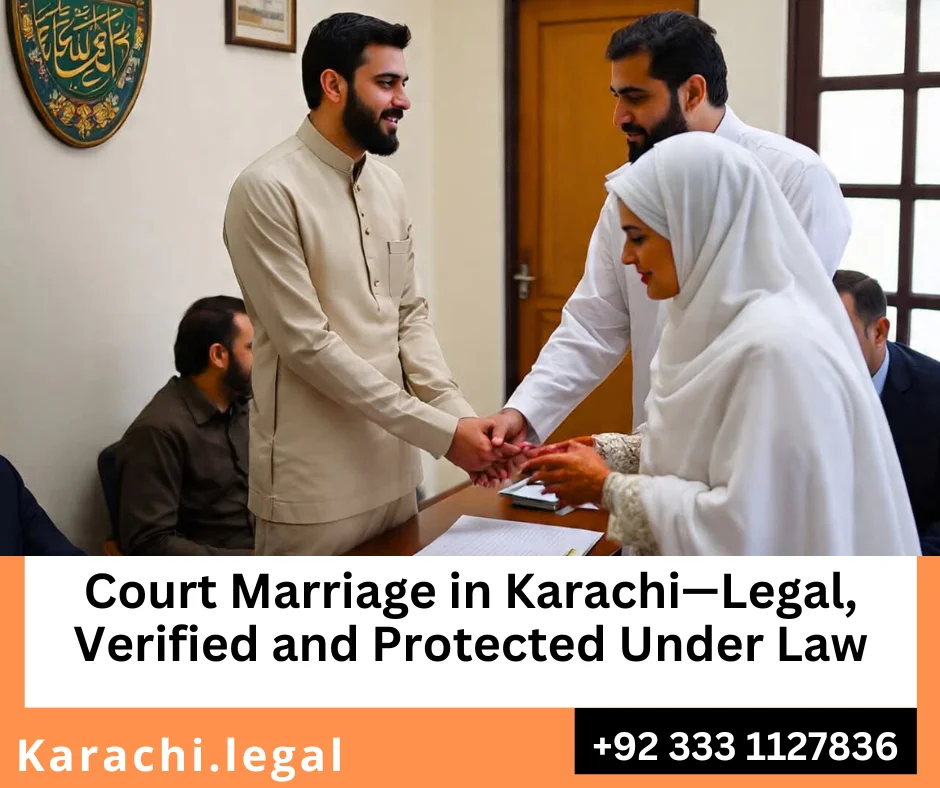
Court Marriage in Karachi—Legal, Verified and Protected Under Law
In a city as diverse and fast-moving as Karachi, couples often seek a legal, secure, and dignified way to solemnize their marriage without unnecessary complications. Court marriage in Karachi provides a lawful, transparent, and court-verified pathway for couples who want their union recognised under Pakistani law while protecting their rights, dignity, and future legal security.
Karachi Legal has structured this authority guide to explain the complete legal framework, procedural requirements, documentation, and lawful registration process so couples can move forward with clarity and confidence.
Understanding Court Marriage in Karachi
Court marriage is a legally recognized marriage solemnized and registered through lawful procedures under applicable marriage laws of Sindh Province and Pakistan. It provides couples with an officially recorded union that is admissible for NADRA, immigration, inheritance, and family record purposes.
Unlike informal or undocumented marriages, court marriage ensures proper registration, legal evidence, and protection of marital rights under Pakistani law.


Legal Framework Governing Court Marriage in Karachi
Court marriages in Karachi are governed by:
- Muslim Family Laws Ordinance
• Sindh Muslim Marriages Registration Rules
• Family Courts Act
• Relevant provincial administrative procedures
These laws regulate the registration, documentation, and lawful recording of marriages within Karachi’s jurisdiction.
Eligibility for Court Marriage in Karachi
To contract a lawful court marriage in Karachi, both parties must:
- Be legally eligible to marry under Islamic and Pakistani law
• Be of lawful marriageable age
• Give free and informed consent
• Not be within prohibited degrees of relationship
• Provide valid identity documentation
Required Documents for Court Marriage
Court marriage in Karachi requires structured documentation to ensure legal authenticity and future usability. Commonly required documents include:
- CNIC or B-Form
• Passport copies (if applicable)
• Two passport-size photographs
• Divorce decree or death certificate (if previously married)
• Affidavit of free will
• Nikahnama documentation
• Witness identification documents
Step-by-Step Court Marriage Procedure in Karachi
Step 1 – Verification and Legal Consultation
The process begins with document verification and eligibility confirmation.
Step 2 – Affidavits and Declarations
Lawful affidavits and declarations are prepared to establish free consent and marital status.
Step 3 – Nikah and Witness Confirmation
Nikah is solemnised in the presence of witnesses under lawful conditions.
Step 4 – Marriage Registration
The marriage is officially registered under the union council or authorized registrar procedures.
Step 5 – Certified Documentation
Couples receive certified nikahnama copies and registration proof.

Online Court Marriage in Karachi
Karachi Legal facilitates structured online legal consultation for couples seeking a court marriage while managing documentation remotely. This service is particularly useful for overseas Pakistanis and couples residing in different locations.
Court Marriage for Overseas Pakistanis
Overseas Pakistanis often require legally recorded marriages for immigration, family record registration, and embassy purposes. Karachi Legal provides lawful pathways for overseas court marriages connected with Karachi-based registration.
NADRA Registration and Legal Record
Properly registered court marriages allow couples to update NADRA family registration certificates, spouse records, and official data.
Why Court Marriage Is Important
Court marriage protects:
- Spousal rights
• Inheritance claims
• Immigration records
• Family dignity
• Legal security
Frequently Asked Questions
Is court marriage legal in Karachi?
Yes, court marriage is fully legal when registered under applicable laws.
Is NADRA registration possible after a court marriage?
Yes, NADRA records can be updated using a registered nikahnama.
Can overseas Pakistanis perform a court marriage in Karachi?
Yes, lawful procedures exist for overseas Pakistanis.
Are witnesses mandatory?
Yes, witnesses are required for lawful solemnization.